A new peer-reviewed editorial has been published in the journal TMG Journal for Media History.
This editorial to the special issue ‘Media Archaeology 2.0: Rethinking Media Histories with the Digital Humanities’ starts with the observation that digital humanities has become more archaeological, while media archaeology has become more digital. It offers a comprehensive account of both fields, reconstructing the development of media archaeology as a field, method, and pedagogy, including a selective overview of international developments beyond its canonical German- and Anglophone centres, and situating its encounter with the computational and reflexive turns in the digital humanities.
We show how both fields have evolved methodologically, conceptually, and institutionally. Their conjuncture is marked by multiple contact zones, including the laboratory, the archive, and the dataset. Rather than presenting a seamless convergence, we foreground the productive frictions that arise around issues of evidence, materiality, scale, and interpretation.
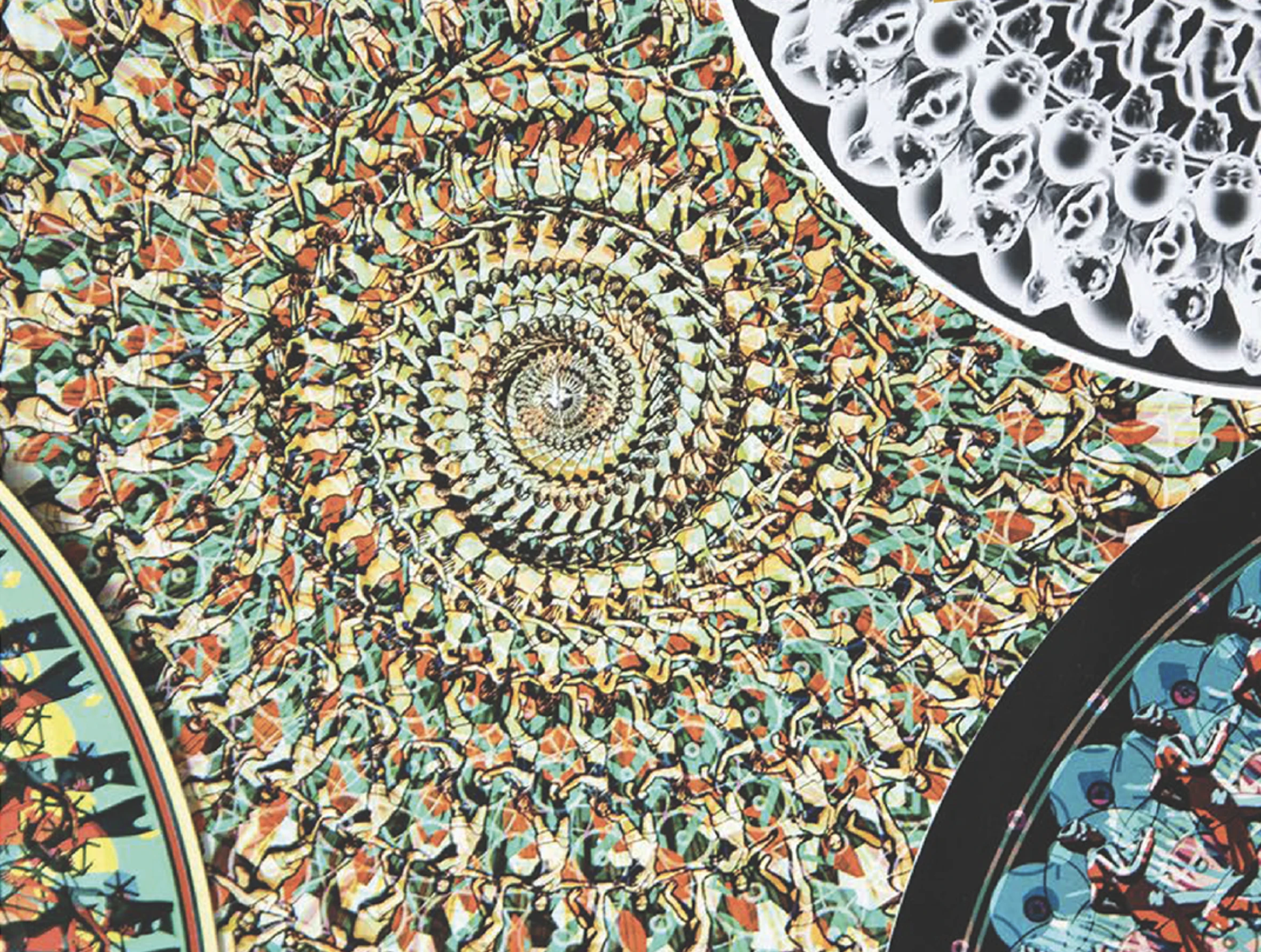
Image: Artwork by Guido Devadder (Digital-native phenakistiscopes)
Citation
van der Heijden, T. & Jancovic, M. (2026). Media Archaeology Meets Digital Humanities: Global Trajectories, Methodological Frictions, and Contact Zones after the Computational Turn. TMG Journal for Media History, 29 (1), 1-36. https://doi.org/10.18146/tmg.994