
The story of the invention of celluloid as the first plastic is well-known. But where did the materials needed to make it originate from?
The initiative
Why this matters
Companies like Fujifilm, Agfa or Eastman Kodak are still globally famous, household names even in the digital age. These companies made their fortunes making film and photographic products, and became giants of the chemical industry. Yet the familiar histories of these businesses tell us surprisingly little about where their materials came from, who produced them, and how their manufacture has transformed environments and communities around the world.
Film stock depended on an extensive network of farms, forests, slaughterhouses, mines, chemical plants, ports and trading companies. Raw materials moved through supply chains that crossed national and imperial borders. The manufacture of film was shaped not only by laboratory inventions and corporate decisions, but also by local environments and geography: the chemistry of soil, the purity of rivers, the humidity of the air, the availability of particular plants and animals, and the infrastructures through which materials could be transported.
These material histories remain difficult to reconstruct. The surviving records of the photochemical industry are scattered across corporate, state and museum archives in several countries. Collections have been divided by mergers, wars, corporate restructuring and the closure of factories. Many are only partially catalogued, inaccessible online or closed to external researchers. Studying even one manufacturer can therefore require connecting evidence from numerous institutions, languages and types of source.
CINEAGRI addresses this problem by making use of the latest digital tools and methods, and applying them to archival research. With a particular focus on the region around the East China Sea, the project examines individual factories and extraction sites while also tracing the transnational trade and knowledge networks that connected them. This approach helps shift the history of celluloid film beyond its conventional focus on Western inventors and corporations. It shows that cinema was also made possible because of the ecologies and labor done in Taiwanese camphor forests, Chinese and Korean cotton-producing regions, Japanese river valleys, Chilean mines, and European chemical-manufacturing towns.
Research in collections connected to Agfa, IG Farben, Schering, Fujifilm, Daicel, Gevaert and Konica has so far produced a digital corpus of more than 60,000 pages. This digital collection brings together unique, rare and intensely multilingual sources, including corporate and personal correspondence, technical reports, unpublished manuscripts, supply records and internal histories. These documents preserve evidence that is often absent from official company narratives: failed experiments, disrupted shipments, material shortages, negotiations with suppliers and the environmental conditions affecting production.
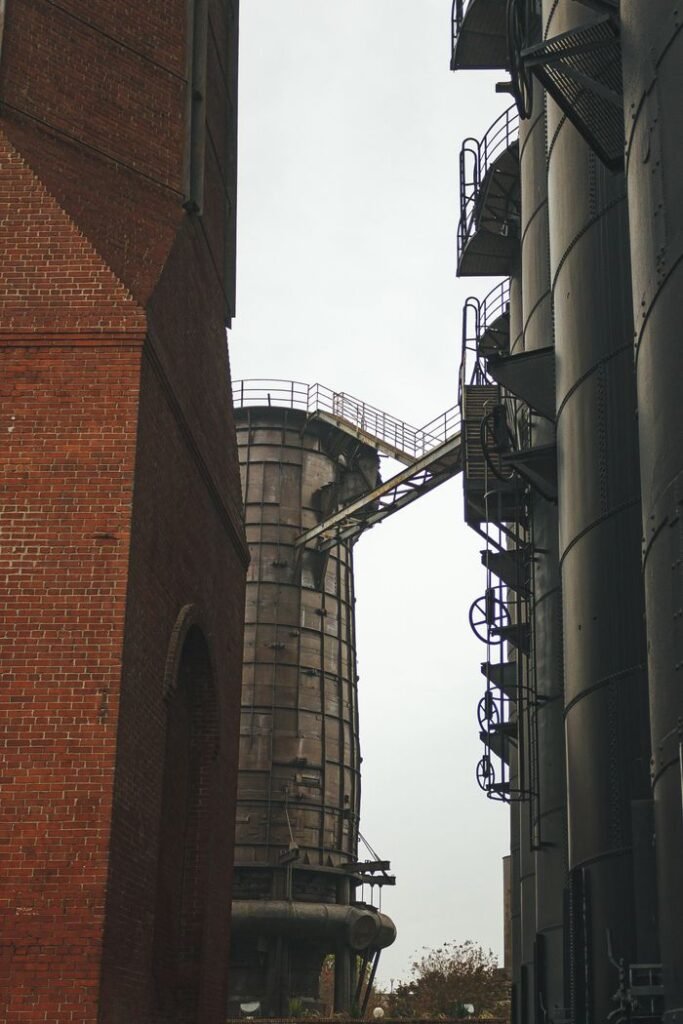

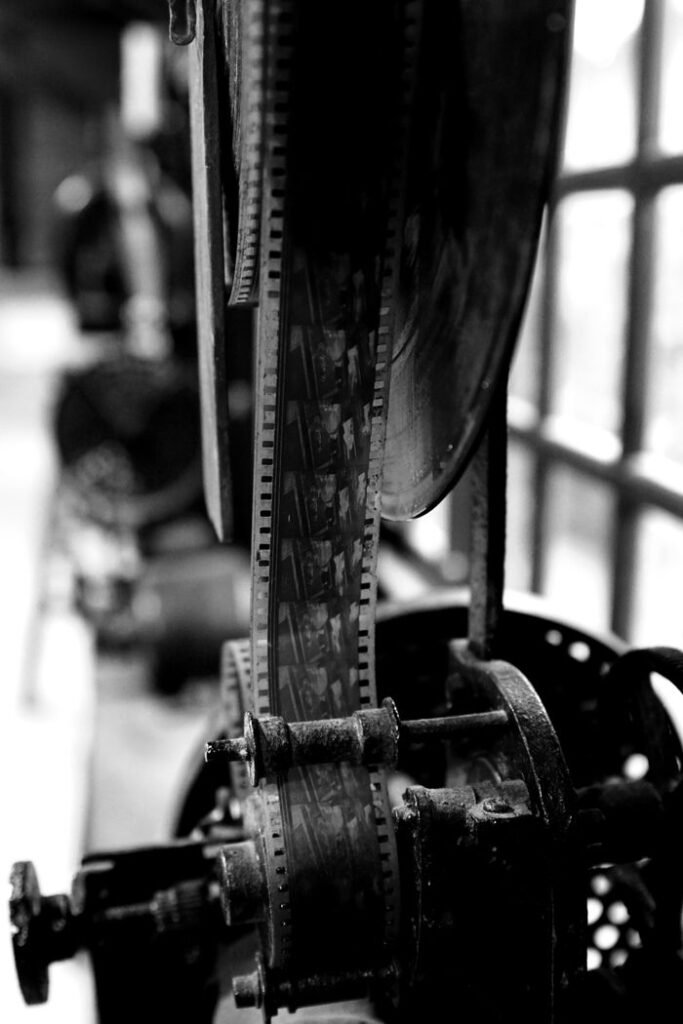
The corpus has been processed using high-precision text and handwriting recognition. CINEAGRI is using it to develop a historically grounded research infrastructure for discovering and connecting information across multilingual archival collections. Its custom-built retrieval system supports questions that cannot be answered from a single document or archive, while keeping results connected to their underlying historical sources to ensure verifiability. Large language models are used here as research instruments for navigating a complex corpus. This infrastructure is now supporting the development of an open digital atlas of the “elements of cinema.” The atlas will connect materials, factories, suppliers, workers, trading firms, transport routes and environments. It will make it possible to examine how photochemical manufacturing operated at several scales, from the microhistory of an individual factory to the global circulation of commodities.
The resulting resource is intended for anyone interested in the history of photochemical media: From film and photography ethusiasts, to scholars and students of film and media, historians of chemistry, technology, business, labor, agriculture, empire and the environment. Film archivists and conservation researchers may also use provenance and manufacturing data to explore whether differences in raw materials or production conditions help explain how particular films age and deteriorate. The underlying research demonstrates that such collaboration has considerable potential: the material and aesthetic properties of film could be affected by droughts, substitutions in cotton supply, gelatin provenance and other environmental disruptions.
By making these relationships visible, CINEAGRI offers a more geographically inclusive history of cinema. It also provides new ways to understand the film industry’s place within histories of colonialism, industrial agriculture, environmental change and global commodity trade.
Learn more about the research methodology
01
Connected archives
CINEAGRI brings together tens of thousands of pages from geographically dispersed collections. By connecting correspondence, technical records, corporate histories and supply documents, the project makes it possible to study the photochemical industry across corporate, national and linguistic boundaries.
02
Shared research infrastructure
The project combines archival research, text and handwriting recognition, structured data and source-grounded information retrieval. The resulting corpus and digital atlas are being developed as reusable resources for historians, media scholars, archivists and researchers in related fields.
03
Material and environmental histories
By tracing materials from sites of extraction to factories and finished film, CINEAGRI reveals how cinema participated in colonial trade, industrial agriculture and environmental transformation. It shows that climate, water, plants, animals and logistics were not merely the background to film history, but part of its technological foundation.
Funding and support
The CINEAGRI project is based at the Vrije Universiteit Amsterdam and funded by the Dutch Research Council (NWO) under the aegis of the VENI program (grant identifier VI.Veni.221C.026).


The project would not be possible without the support and expertise of a large number of project partners, scientists, archivists and librarians. See the acknowledgements here.
Investigators

Principal Investigator
Dr. Marek Jancovic is Assistant Professor of Media Studies at the Vrije Universiteit Amsterdam. His research is centered around the materiality and technology of the moving image, film preservation practices, media and the environment, and format studies.
He is the author of A Media Epigraphy of Video Compression: Reading Traces of Decay (2023); together with Jimi Jones, the author of The Future of Memory: A History of Lossless Format Standards in the Moving Image Archive (2025) and, with Axel Volmar and Alexandra Schneider, the editor of Format Matters: Standards, Practices, and Politics in Media Cultures (2020). The Future of Memory was the winner of the 2026 Society of American Archivists Preservation Publication Award.